
A Call for Courageous Government Action to Prevent Tech-Facilitated Gender-based Violence

A Call for Courageous Government Action to Prevent Tech-Facilitated Gender-based Violence
Scroll for more
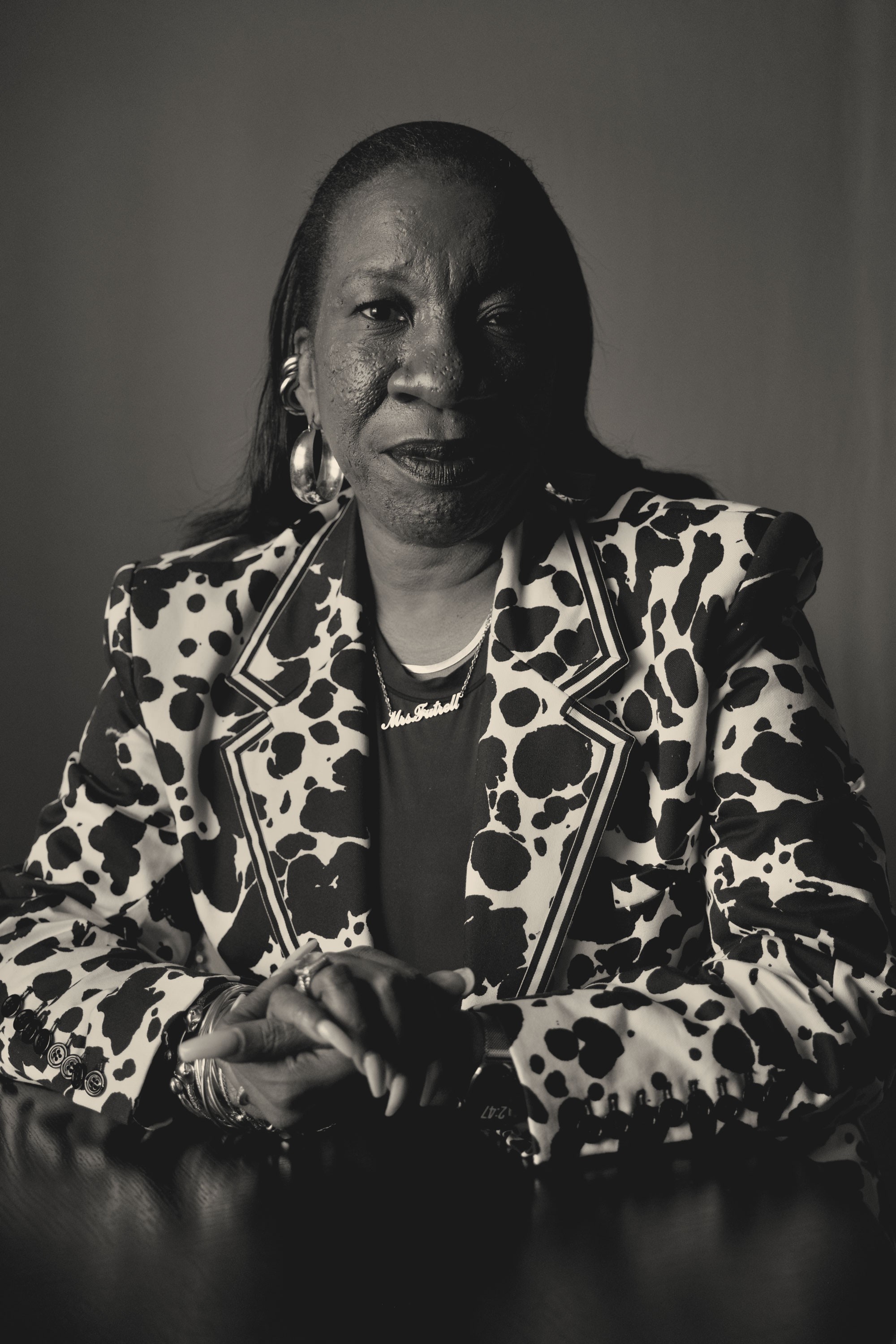
“For too long, women and girls have been told that online abuse is simply the price of participating in public life. It isn’t. Survivors should not have to carry the burden of staying safe online while powerful institutions fail to act. It’s time to shift the burden of safety onto those with the power to prevent harm. Governments and the technology sector have both the responsibility and the opportunity to build digital spaces where everyone can participate safely, freely and with dignity.”
Tarana Burke
All In Co-Chair
about
All In: Global Leaders for Ending Gender-Based Violence brings together eminent leaders across sectors, united by one bold premise: gender-based violence (GBV) is solvable.
All In has chosen technology and GBV as its inaugural thematic priority because tech-facilitated gender-based violence (TFGBV) is a rapidly growing form of violence with significant human impacts, including as a powerful amplifier of offline GBV. TFGBV does not stand apart from the broader crisis of GBV, in which one in three women experience physical or sexual violence in their lifetime. It has implications across our economies, public health, and democracies. It is also an issue squarely within our collective capacity to address.
Governments are already proving that action is possible. This report calls on government leaders to use laws, regulation, resources, and political leadership to set a clear standard for safe digital spaces, with strong enforcement and accountability for harms.

Online abuse does not stay online
TFGBV silences voices; incites fear, hate and violence; and leads to physical and sexual violence against women, girls, and gender diverse persons. The line between on and offline GBV is increasingly blurry as perpetrators target women and girls across all aspects of their lives. Among women journalists, 42% experienced offline harms triggered by online violence in 2025, more than double the rate in 2020.
The scale of harm is staggering
70%
of women human rights defenders, activists, journalists, and media workers across 19 countries have experienced TFGBV in the course of their work.
550%
increase in the number of deepfake videos online from 2019 to 2023. Deepfake pornography makes up 98% of all deepfake videos online, and 99% of individuals targeted are women.
97%
of illegal AI-generated images are of girls.
from 2024 to 2025, AI-generated child sexual abuse videos increased by
26,385%
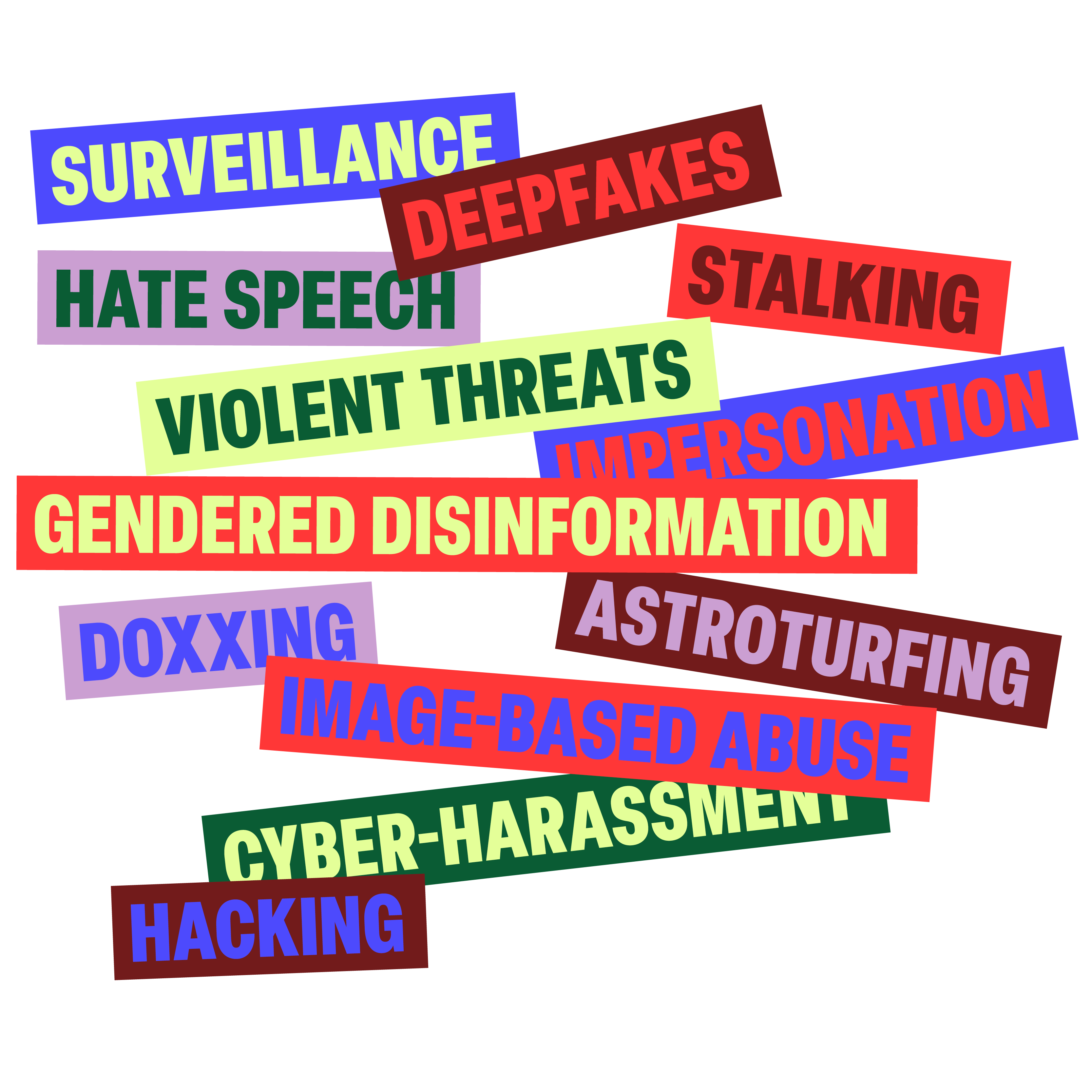
In recent years, more than 40 distinct forms have been documented, from cyber-harassment, doxxing, and stalking to image-based abuse and gendered disinformation, with new forms continuously emerging as tech evolves, such as the rise of generative AI.
Tech is amplifying
GBV at unprecedented scale
Technology has transformed how we work, learn, and build community, and has opened new economic, educational, and civic opportunities for women and girls. However, left unchecked, that same power of tech is being weaponized to cause harm at scale.
The costs of TFGBV are borne by all
TFGBV is estimated to cost European Union countries between €49 and €89.3 billion every year
Economies absorb the price through healthcare, legal costs, and lost participation: TFGBV is estimated to cost European Union countries between €49 and €89.3 billion every year.
Democracy and sovereignty are weakened when gendered disinformation, deployed strategically by state and non-state actors, silences women leaders, journalists, and voters and distorts civic space.
And peace and security are undermined: men who support violence against women are up to three times more likely to support violent extremism.
Men and boys are the primary perpetrators of TFGBV
Tech is facilitating the mainstreaming of misogyny via the so-called “manosphere.” This growing ecosystem exploits boys and young men’s anxieties and vulnerabilities, manipulates their need for belonging, and builds community out of manufactured grievances.
Algorithmic amplification, recommender systems, and other tech features accelerate exposure to this harmful content and reward its creators, moving the rhetoric and beliefs that fuel GBV from fringe online spaces into mainstream public and political discourse.
Perpetrators are no longer only partners or people known to survivors, but opportunists, misogynistic networks, governments, and politically motivated groups who hide behind screens and use gendered narratives to sow division, intimidate and silence dissent, fuel hostility, and shift public attitudes. The dual rise of TFGBV and the global backlash against gender equality is not a coincidence.
Gender inequality, misogyny, profit and impunity are fuelling the perfect storm
Like all forms of GBV, TFGBV is rooted in gender inequality and patriarchal norms. Tech has not created this violence; it has supercharged it, amplifying existing attitudes, beliefs, and behaviours that have long fuelled GBV at unprecedented scale, speed, and anonymity. These systemic biases and inequalities are baked into tech’s design.
TFGBV is also driven by business models that put profit over safety
Platforms measure success by engagement and rely on engagement-based advertisement revenue. This rewards outrage over safety, creating monetised ecosystems that directly profit from generating and sharing TFGBV.
Impunity and limited accountability for harm, combined with legal gaps also enable this violence to go unchecked. Fewer than 12% of countries have laws addressing cyber sexual harassment. Relying on voluntary self-regulation has failed to curb harm, and legal fragmentation creates compliance loopholes across countries.
TFGBV is solvable. Our toolkit to prevent TFGBV is growing and urgently requires greater political will, investment, and commitment to drive change.
Some governments at the frontier are responding
01
The EU’s Digital Services Act recognises GBV as a systemic risk that major platforms must identify, assess, and mitigate, and the EU AI Act now bans nudification apps.
02
Brazil has decreed stronger platform responsibilities for preventing and responding to TFGBV, including rapid removal of non-consensual intimate imagery and requiring dedicated reporting channels.
03
Australia is moving to legislating a Digital Duty of Care.
04
The UK’s Online Safety Act requires regulated services to be safe by design.
05
Multilateral frameworks, from the Global Digital Compact to the African Union Convention on Ending Violence Against Women and Girls, increasingly recognise TFGBV, and litigation is beginning to chip away at the perceived invincibility of tech platforms.

80% of Americans believe government should maintain rules for ai safety and data security even if it slows development
there is growing momentum for change
Decades of work by women’s rights organizations, digital rights activists, survivors, and feminist technologists have documented TFGBV, built the evidence base, and driven rising public demand for change. That demand is a strategic asset: when people know their rights, reporting pathways, and available support, public pressure grows on governments to act and on technology companies to change.

“Industry’s faltering inertia on critical online and AI harms proves we’ve reached the limits of voluntary action. We need a mandated pathway, with safety by design as its foundation, to make technology platforms accountable and liable for the safety of the people they profit from. This important work is underway across several countries. All forms of technology should be tools of expression and collaboration, not weapons of gendered violence.”
Julie Inman Grant
Australia’s eSafety Commissioner
and All In Technology Lead
This is a fundamental shift in responsibility: away from individuals absorbing harm, onto the institutions with the power to prevent it.
Duties of care already exist across industries, from car seatbelts to food safety inspections and pharmaceuticals, reflecting a legal and moral obligation to prevent foreseeable harm. This call is grounded in human rights frameworks, including the UN Guiding Principles on Business and Human Rights, and it must specifically recognize gendered harms, drawing on the expertise of GBV research, practice, and feminist movements.

It’s time to go
All In on safer tech
To address TFGBV, All In calls on governments to implement this duty of care through actions across three pillars
prevention
response and healing
accountability and justice
All these actions must be rights-based, survivor-centered, adapted to local contexts, take a lifecycle approach, and be implemented through multi-stakeholder partnerships across government, industry, and civil society.
resourcing
Properly fund TFGBV prevention and response through national budgets, with the adequate resourcing and authority for effective enforcement of laws and regulation. An effective duty of care approach must be resourced.
movement building
Invest in survivor-led and women’s rights organisations with core, flexible funding and support the participation of these organisations in the prevention and response to TFGBV. This includes involving those with lived experience in the design of policies and actions to address TFGBV.
global governance & collaboration
A borderless problem requires a borderless response, with gender equality embedded in digital governance frameworks that create shared standards, inspire national action, and expand influence on the tech sector.
evidence generation
Invest in closing data and evidence gaps, particularly in the Global South, so the true nature and scale of TFGBV and what works to prevent it can be measured, funded, and scaled.
Safer tech is about creating a safer world for all
Mandating a duty of care would be catalytic far beyond TFGBV, from protecting children online to safeguarding mental health, countering violent extremism, and defending democracy. Creating safe digital spaces is an investment in national resilience, secuirty, and stability.
By going All In, we can stop the worldwide web from being used as a worldwide weapon.
Download the full report
© 2026 All In | Global Leaders for Ending GBV

A Call for Courageous Government Action to Prevent Tech-Facilitated Gender-based Violence
Scroll for more
“For too long, women and girls have been told that online abuse is simply the price of participating in public life. It isn’t. Survivors should not have to carry the burden of staying safe online while powerful institutions fail to act. It’s time to shift the burden of safety onto those with the power to prevent harm. Governments and the technology sector have both the responsibility and the opportunity to build digital spaces where everyone can participate safely, freely and with dignity.”
Tarana Burke
All In Co-Chair
about
All In: Global Leaders for Ending Gender-Based Violence brings together eminent leaders across sectors, united by one bold premise: gender-based violence (GBV) is solvable.
All In has chosen technology and GBV as its inaugural thematic priority because tech-facilitated gender-based violence (TFGBV) is a rapidly growing form of violence with significant human impacts, including as a powerful amplifier of offline GBV. TFGBV does not stand apart from the broader crisis of GBV, in which one in three women experience physical or sexual violence in their lifetime. It has implications across our economies, public health, and democracies. It is also an issue squarely within our collective capacity to address.
Governments are already proving that action is possible. This report calls on government leaders to use laws, regulation, resources, and political leadership to set a clear standard for safe digital spaces, with strong enforcement and accountability for harms.
Online abuse does not stay online
TFGBV silences voices; incites fear, hate and violence; and leads to physical and sexual violence against women, girls, and gender diverse persons. The line between on and offline GBV is increasingly blurry as perpetrators target women and girls across all aspects of their lives. Among women journalists, 42% experienced offline harms triggered by online violence in 2025, more than double the rate in 2020.
In recent years, more than 40 distinct forms have been documented, from cyber-harassment, doxxing, and stalking to image-based abuse and gendered disinformation, with new forms continuously emerging as tech evolves, such as the rise of generative AI.
The scale of harm is staggering
70%
of women human rights defenders, activists, journalists, and media workers across 19 countries have experienced TFGBV in the course of their work.
550%
increase in the number of deepfake videos online from 2019 to 2023. Deepfake pornography makes up 98% of all deepfake videos online, and 99% of individuals targeted are women.
97%
of illegal AI-generated images are of girls.
from 2024 to 2025, AI-generated child sexual abuse videos increased by
26,385%
Tech is amplifying
GBV at unprecedented scale
Technology has transformed how we work, learn, and build community, and has opened new economic, educational, and civic opportunities for women and girls. However, left unchecked, that same power of tech is being weaponized to cause harm at scale.
The costs of TFGBV are borne by all
TFGBV is estimated to cost European Union countries between €49 and €89.3 billion every year
Economies absorb the price through healthcare, legal costs, and lost participation: TFGBV is estimated to cost European Union countries between €49 and €89.3 billion every year.
Democracy and sovereignty are weakened when gendered disinformation, deployed strategically by state and non-state actors, silences women leaders, journalists, and voters and distorts civic space.
And peace and security are undermined: men who support violence against women are up to three times more likely to support violent extremism.
Men and boys are the primary perpetrators of TFGBV
Tech is facilitating the mainstreaming of misogyny via the so-called “manosphere.” This growing ecosystem exploits boys and young men’s anxieties and vulnerabilities, manipulates their need for belonging, and builds community out of manufactured grievances.
Algorithmic amplification, recommender systems, and other tech features accelerate exposure to this harmful content and reward its creators, moving the rhetoric and beliefs that fuel GBV from fringe online spaces into mainstream public and political discourse.
Perpetrators are no longer only partners or people known to survivors, but opportunists, misogynistic networks, governments, and politically motivated groups who hide behind screens and use gendered narratives to sow division, intimidate and silence dissent, fuel hostility, and shift public attitudes. The dual rise of TFGBV and the global backlash against gender equality is not a coincidence.

Gender inequality, misogyny, profit and impunity are fuelling the perfect storm
Like all forms of GBV, TFGBV is rooted in gender inequality and patriarchal norms. Tech has not created this violence; it has supercharged it, amplifying existing attitudes, beliefs, and behaviours that have long fuelled GBV at unprecedented scale, speed, and anonymity. These systemic biases and inequalities are baked into tech’s design.
TFGBV is also driven by business models that put profit over safety
Platforms measure success by engagement and rely on engagement-based advertisement revenue. This rewards outrage over safety, creating monetised ecosystems that directly profit from generating and sharing TFGBV.
Impunity and limited accountability for harm, combined with legal gaps also enable this violence to go unchecked. Fewer than 12% of countries have laws addressing cyber sexual harassment. Relying on voluntary self-regulation has failed to curb harm, and legal fragmentation creates compliance loopholes across countries.
Some governments at the frontier are responding
01
The EU’s Digital Services Act recognises GBV as a systemic risk that major platforms must identify, assess, and mitigate, and the EU AI Act now bans nudification apps.
02
Brazil has decreed stronger platform responsibilities for preventing and responding to TFGBV, including rapid removal of non-consensual intimate imagery and requiring dedicated reporting channels.
03
Australia is moving to legislating a Digital Duty of Care.
04
The UK’s Online Safety Act requires regulated services to be safe by design.
05
Multilateral frameworks, from the Global Digital Compact to the African Union Convention on Ending Violence Against Women and Girls, increasingly recognise TFGBV, and litigation is beginning to chip away at the perceived invincibility of tech platforms.
80% of Americans believe government should maintain rules for ai safety and data security even if it slows development
there is growing momentum for change
Decades of work by women’s rights organizations, digital rights activists, survivors, and feminist technologists have documented TFGBV, built the evidence base, and driven rising public demand for change. That demand is a strategic asset: when people know their rights, reporting pathways, and available support, public pressure grows on governments to act and on technology companies to change.
TFGBV is solvable. Our toolkit to prevent TFGBV is growing and urgently requires greater political will, investment, and commitment to drive change.
This is a fundamental shift in responsibility: away from individuals absorbing harm, onto the institutions with the power to prevent it.
Duties of care already exist across industries, from car seatbelts to food safety inspections and pharmaceuticals, reflecting a legal and moral obligation to prevent foreseeable harm. This call is grounded in human rights frameworks, including the UN Guiding Principles on Business and Human Rights, and it must specifically recognize gendered harms, drawing on the expertise of GBV research, practice, and feminist movements.
It’s time to go
All In on safer tech
“Industry’s faltering inertia on critical online and AI harms proves we’ve reached the limits of voluntary action. We need a mandated pathway, with safety by design as its foundation, to make technology platforms accountable and liable for the safety of the people they profit from. This important work is underway across several countries. All forms of technology should be tools of expression and collaboration, not weapons of gendered violence.”
Julie Inman Grant
Australia’s eSafety Commissioner
and All In Technology Lead
To address TFGBV, All In calls on governments to implement this duty of care through actions across three pillars
prevention
Response and Healing
Accountability and Justice
All these actions must be rights-based, survivor-centered, adapted to local contexts, take a lifecycle approach, and be implemented through multi-stakeholder partnerships across government, industry, and civil society.
resourcing
Properly fund TFGBV prevention and response through national budgets, with the adequate resourcing and authority for effective enforcement of laws and regulation. An effective duty of care approach must be resourced.
movement building
Invest in survivor-led and women’s rights organisations with core, flexible funding and support the participation of these organisations in the prevention and response to TFGBV. This includes involving those with lived experience in the design of policies and actions to address TFGBV.
global governance & collaboration
A borderless problem requires a borderless response, with gender equality embedded in digital governance frameworks that create shared standards, inspire national action, and expand influence on the tech sector.
evidence generation
Invest in closing data and evidence gaps, particularly in the Global South, so the true nature and scale of TFGBV and what works to prevent it can be measured, funded, and scaled.
Safer tech is about creating a safer world for all
Mandating a duty of care would be catalytic far beyond TFGBV, from protecting children online to safeguarding mental health, countering violent extremism, and defending democracy. Creating safe digital spaces is an investment in national resilience, secuirty, and stability.
By going All In, we can stop the worldwide web from being used as a worldwide weapon.
Download the full report
© 2026 All In | Global Leaders for Ending Gender-Based Violence
A Call for Courageous Government Action to Prevent Tech-Facilitated Gender-based Violence
Scroll for more
“For too long, women and girls have been told that online abuse is simply the price of participating in public life. It isn’t. Survivors should not have to carry the burden of staying safe online while powerful institutions fail to act. It’s time to shift the burden of safety onto those with the power to prevent harm. Governments and the technology sector have both the responsibility and the opportunity to build digital spaces where everyone can participate safely, freely and with dignity.”
Tarana Burke
All In Co-Chair
about
All In: Global Leaders for Ending Gender-Based Violence brings together eminent leaders across sectors, united by one bold premise: gender-based violence (GBV) is solvable.
All In has chosen technology and GBV as its inaugural thematic priority because tech-facilitated gender-based violence (TFGBV) is a rapidly growing form of violence with significant human impacts, including as a powerful amplifier of offline GBV. TFGBV does not stand apart from the broader crisis of GBV, in which one in three women experience physical or sexual violence in their lifetime. It has implications across our economies, public health, and democracies. It is also an issue squarely within our collective capacity to address.
Governments are already proving that action is possible. This report calls on government leaders to use laws, regulation, resources, and political leadership to set a clear standard for safe digital spaces, with strong enforcement and accountability for harms.
Online abuse does not stay online
TFGBV silences voices; incites fear, hate and violence; and leads to physical and sexual violence against women, girls, and gender diverse persons. The line between on and offline GBV is increasingly blurry as perpetrators target women and girls across all aspects of their lives. Among women journalists, 42% experienced offline harms triggered by online violence in 2025, more than double the rate in 2020.
In recent years, more than 40 distinct forms have been documented, from cyber-harassment, doxxing, and stalking to image-based abuse and gendered disinformation, with new forms continuously emerging as tech evolves, such as the rise of generative AI.
The scale of harm is staggering
70%
of women human rights defenders, activists, journalists, and media workers across 19 countries have experienced TFGBV in the course of their work.
550%
increase in the number of deepfake videos online from 2019 to 2023. Deepfake pornography makes up 98% of all deepfake videos online, and 99% of individuals targeted are women.
97%
of illegal AI-generated images are of girls.
from 2024 to 2025, AI-generated child sexual abuse videos increased by
26,385%
Tech is amplifying
GBV at unprecedented scale
Technology has transformed how we work, learn, and build community, and has opened new economic, educational, and civic opportunities for women and girls. However, left unchecked, that same power of tech is being weaponised to cause harm at scale.
The costs of TFGBV are borne by all
TFGBV is estimated to cost European Union countries between €49 and €89.3 billion every year
Economies absorb the price through healthcare, legal costs, and lost participation: TFGBV is estimated to cost European Union countries between €49 and €89.3 billion every year.
Democracy and sovereignty are weakened when gendered disinformation, deployed strategically by state and non-state actors, silences women leaders, journalists, and voters and distorts civic space.
And peace and security are undermined: men who support violence against women are up to three times more likely to support violent extremism.
Men and boys are the primary perpetrators of TFGBV
Tech is facilitating the mainstreaming of misogyny via the so-called “manosphere.” This growing ecosystem exploits boys and young men’s anxieties and vulnerabilities, manipulates their need for belonging, and builds community out of manufactured grievances.
Algorithmic amplification, recommender systems, and other tech features accelerate exposure to this harmful content and reward its creators, moving the rhetoric and beliefs that fuel GBV from fringe online spaces into mainstream public and political discourse.
Perpetrators are no longer only partners or people known to survivors, but opportunists, misogynistic networks, governments, and politically motivated groups who hide behind screens and use gendered narratives to sow division, intimidate and silence dissent, fuel hostility, and shift public attitudes. The dual rise of TFGBV and the global backlash against gender equality is not a coincidence.
Gender inequality, misogyny, profit and impunity are fuelling the perfect storm
Like all forms of GBV, TFGBV is rooted in gender inequality and patriarchal norms. Tech has not created this violence; it has supercharged it, amplifying existing attitudes, beliefs, and behaviours that have long fuelled GBV at unprecedented scale, speed, and anonymity. These systemic biases and inequalities are baked into tech’s design.
TFGBV is also driven by business models that put profit over safety
Platforms measure success by engagement and rely on engagement-based advertisement revenue. This rewards outrage over safety, creating monetised ecosystems that directly profit from generating and sharing TFGBV.
Impunity and limited accountability for harm, combined with legal gaps also enable this violence to go unchecked. Fewer than 12% of countries have laws addressing cyber sexual harassment. Relying on voluntary self-regulation has failed to curb harm, and legal fragmentation creates compliance loopholes across countries.
Some governments at the frontier are responding
01
The EU’s Digital Services Act recognises GBV as a systemic risk that major platforms must identify, assess, and mitigate, and the EU AI Act now bans nudification apps.
02
Brazil has decreed stronger platform responsibilities for preventing and responding to TFGBV, including rapid removal of non-consensual intimate imagery and requiring dedicated reporting channels.
03
Australia is moving to legislating a Digital Duty of Care.
04
The UK’s Online Safety Act requires regulated services to be safe by design.
05
Multilateral frameworks, from the Global Digital Compact to the African Union Convention on Ending Violence Against Women and Girls, increasingly recognise TFGBV, and litigation is beginning to chip away at the perceived invincibility of tech platforms.
80% of Americans believe government should maintain rules for ai safety and data security even if it slows development
there is growing momentum for change
Decades of work by women’s rights organizations, digital rights activists, survivors, and feminist technologists have documented TFGBV, built the evidence base, and driven rising public demand for change. That demand is a strategic asset: when people know their rights, reporting pathways, and available support, public pressure grows on governments to act and on technology companies to change.
TFGBV is solvable. Our toolkit to prevent TFGBV is growing and urgently requires greater political will, investment, and commitment to drive change.
This is a fundamental shift in responsibility: away from individuals absorbing harm, onto the institutions with the power to prevent it.
Duties of care already exist across industries, from car seatbelts to food safety inspections and pharmaceuticals, reflecting a legal and moral obligation to prevent foreseeable harm. This call is grounded in human rights frameworks, including the UN Guiding Principles on Business and Human Rights, and it must specifically recognize gendered harms, drawing on the expertise of GBV research, practice, and feminist movements.
It’s time to go
All In on safer tech
“Industry’s faltering inertia on critical online and AI harms proves we’ve reached the limits of voluntary action. We need a mandated pathway, with safety by design as its foundation, to make technology platforms accountable and liable for the safety of the people they profit from. This important work is underway across several countries. All forms of technology should be tools of expression and collaboration, not weapons of gendered violence.”
Julie Inman Grant
Australia’s eSafety Commissioner
and All In Technology Lead
To address TFGBV, All In calls on governments to implement this duty of care through actions across three pillars
prevention
Response and Healing
Accountability and Justice
All these actions must be rights-based, survivor-centered, adapted to local contexts, take a lifecycle approach, and be implemented through multi-stakeholder partnerships across government, industry, and civil society.
resourcing
Properly fund TFGBV prevention and response through national budgets, with the adequate resourcing and authority for effective enforcement of laws and regulation. An effective duty of care approach must be resourced.
movement building
Invest in survivor-led and women’s rights organisations with core, flexible funding and support the participation of these organisations in the prevention and response to TFGBV. This includes involving those with lived experience in the design of policies and actions to address TFGBV.
global governance & collaboration
A borderless problem requires a borderless response, with gender equality embedded in digital governance frameworks that create shared standards, inspire national action, and expand influence on the tech sector.
evidence generation
Invest in closing data and evidence gaps, particularly in the Global South, so the true nature and scale of TFGBV and what works to prevent it can be measured, funded, and scaled.
Safer tech is about creating a safer world for all
Mandating a duty of care would be catalytic far beyond TFGBV, from protecting children online to safeguarding mental health, countering violent extremism, and defending democracy. Creating safe digital spaces is an investment in national resilience, secuirty, and stability.
By going All In, we can stop the worldwide web from being used as a worldwide weapon.
Download the full report
© 2026 All In | Global Leaders for Ending Gender-Based Violence

